When Treatment Becomes Trauma
Why ‘One-Size-Fits-All’ Care Fails, and What Trauma-Informed Care Actually Requires
This comes up often, so we thought we’d write about it.
Our patients frequently tell us that LiftWell Health has been a place for them to recover, not only from anxiety, depression, OCD or eating disorder, but from their “treatment trauma” experienced in other programs.
This is no coincidence: absolutely everything we do at LiftWell is very intentionally trauma-informed. We triage trauma- big T’s and little t’s alike, from the first phone call with our comforting admissions clinician, Kendall, to the moment you walk through the light blue door of our well appointed home-like center in quiet Westport CT.
If you’ve seen enough behavioral health programs, you know the pattern: The same schedule, the same scripts, the same meal plans, the same phase systems, applied to entirely different humans. Then, we ask why people leave feeling worse than when they arrived, and why they describe feeling controlled instead of cared for.
This is not a patient problem; it’s a system problem.

Mental Health and Eating Disorders Are Not Choices
Mental health conditions and eating disorders are complex, biopsychosocial illnesses shaped by genetics, neurobiology, environment, family systems, trauma, culture, and lived experience. No one chooses OCD. No one elects to have anorexia. No one decides to let depression flatten their world.
Yet, the behavioral health system has spent decades treating these conditions as though they were willful- as though the right combination of compliance, structure, and incentives could produce healing. We don’t tell someone with asthma to ‘try harder to breathe correctly.’ We don’t threaten consequences for unstable blood sugar. Parity between physical and mental illness is a legal standard and a moral obligation. The majority of programs are still not there.
How Behavioral Health Became Industrial
Much of modern behavioral health, particularly at higher levels of care, was built on behavioral frameworks designed for containment and scalability rather than clinical nuance. The rise of giant national treatment systems compounded this: care had to be replicable, easy to train quickly, and measurable in extremely simple metrics. What emerged was manualized treatment: protocol over person
The result can look clean from the outside. But when patients are rotated through identical group schedules regardless of their presentation, moved through behavioral phase systems where progress is defined by compliance, rewarded for ‘good behavior’ and restricted when they struggle- this isn’t just ineffective; it scars.
Trauma is not just “what happened to someone;” it’s how the nervous system responds to powerlessness, rigidity, and loss of agency. When a person with that history is placed inside a rigid system with opaque power dynamics, limited autonomy, and a culture where questioning the process is framed as resistance, their symptoms don’t improve, they escalate.
The Subtler Harms No One Names
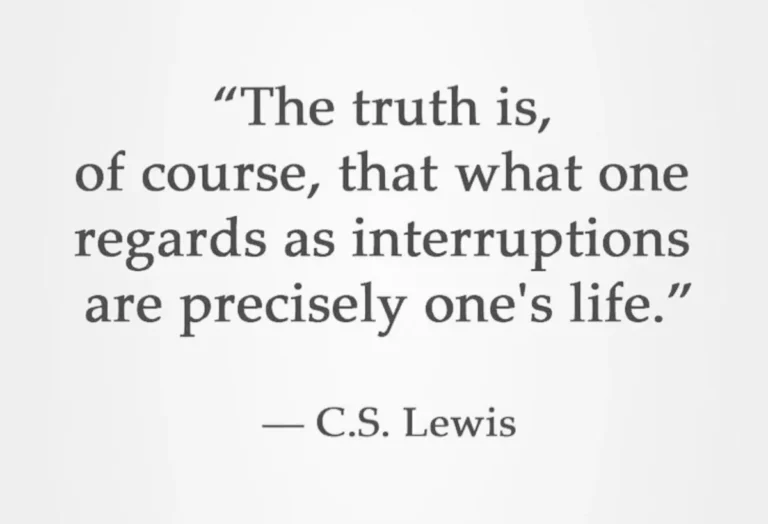
Beyond the structural problems, there is the tone of care: the accumulation of micro-interactions that shape whether a patient feels like a person or a case. The condescension masked as clinical authority. The quiet dismissal of patient insight. The medical gaslighting when someone says ‘this isn’t working for me.’ The threat of a higher level of care deployed as leverage rather than clinical judgment. These are not trivial details. They are the texture of the experience, and they either build or erode the therapeutic relationship.
What Trauma-Informed Care Actually Is
Trauma-informed care is not just a checklist, a training, or a phrase included in a program description. It is a philosophy of care: a fundamental orientation toward the dignity of the people we treat.
At its core, it requires a willingness to say: “I don’t assume I already know you. I become curious about you.” It means recognizing that people learn differently, nervous systems respond differently, bodies hold history, cultural identity shapes the experience of illness, and past trauma shows up even when it isn’t named. It means acknowledging power dynamics present in the clinical relationship, and knowing that healing (especially from control disorders) cannot happen in environments that feel controlling, shaming, or dismissive.
What Doing It Differently Looks Like
At LiftWell, we’ve built our approach around the individual, which means the structure bends toward the person, not the other way around.
Individualized treatment.
This means: No one size fits all meal plans. No generic movement prescriptions. No fixed timelines for progress. Instead, we begin with questions: What does this person need? What has been tried? What has worked, and what hasn’t, and why? The treatment is built from the answers, not applied on top of them.
Movement, flexibility, and real-life integration.
Humans are not built to sit in one room for hours absorbing information passively. Our programming incorporates movement breaks, varied environments, experiential and somatic work, and real-world integration, because the life a patient is returning to doesn’t happen in a group room.
Multiple modalities, multiple access points.
There is no single correct path to healing. We draw from RO-DBT, DBT, ACT, CBT, ERP, creative therapies, family systems work, and integrated nutritional support across all levels of care, because different people need different doors into the same work.
Collaboration over control.
We don’t manage patients. We partner with them. There is no phase system where basic dignity must be earned. There is no good patient/bad patient framework. Engagement is expected; autonomy is respected. Those two things are not in conflict.
Curiosity over certainty.
This may be the most important clinical posture of all. The moment a provider stops being curious and becomes certain, they stop being effective. We don’t override lived experience. We take it seriously as data. A clinician who always knows best is, by definition, no longer listening, and patients know when they’re not being heard.
A Higher Standard
When people leave treatment feeling worse, the instinct in our field is often to frame that as a patient problem, they weren’t ready, they weren’t motivated, they weren’t compliant enough. But a system that consistently produces that outcome is not treating an illness. It is adding to it.
Behavioral health care should be respectful, flexible, curious, and fundamentally human, because these are human conditions. People don’t heal when they feel managed. They heal when they feel seen, heard, understood, and treated as individuals rather than diagnoses. That is not an aspirational standard. It is the minimum we owe the people who come to us for help.
We can do better. And our patients deserve to expect it. Contact us today to schedule a consultation and begin your path toward lasting mental health and wellness.