“Why Did I Think That?” Intrusive Thoughts vs. Impulsive Thoughts Explained
Most people have had the experience of a thought appearing out of nowhere that seemed completely at odds with who they are or what they value. A flash of an image while holding something sharp. A fleeting, strange idea in an inconvenient moment. The immediate reaction is often alarm, followed by shame, and then the quietly exhausting question: does thinking something like that mean something is wrong with me? The short answer, in most cases, is no. But that answer comes with important nuance, and understanding the difference between intrusive thoughts and impulsive thoughts is one of the most clarifying things a person can do for their mental health. At LiftWell, a specialized mental health treatment center serving adults and adolescents throughout Fairfield County and southwestern Connecticut, we work with clients every day who have carried the weight of misunderstood thoughts for far too long. Our evidence-based programs are built to bring clarity, not judgment, to that experience.

What Intrusive Thoughts Actually Are
An intrusive thought is an unwanted mental event that enters consciousness involuntarily, often with content that feels disturbing, inappropriate, or completely out of character. Research suggests that the vast majority of people experience intrusive thoughts on a regular basis. The content varies widely, from violent images to taboo scenarios to fears about harming someone you love, but what defines an intrusive thought is not its content. It is the fact that it arrived without invitation and that it conflicts with the person’s actual values and desires.
This is a critical distinction. An intrusive thought about harm does not mean a person wants to cause harm. In fact, the distress the thought produces is itself evidence of the opposite. People who genuinely wish to do harmful things are not typically horrified by the thought of doing them.
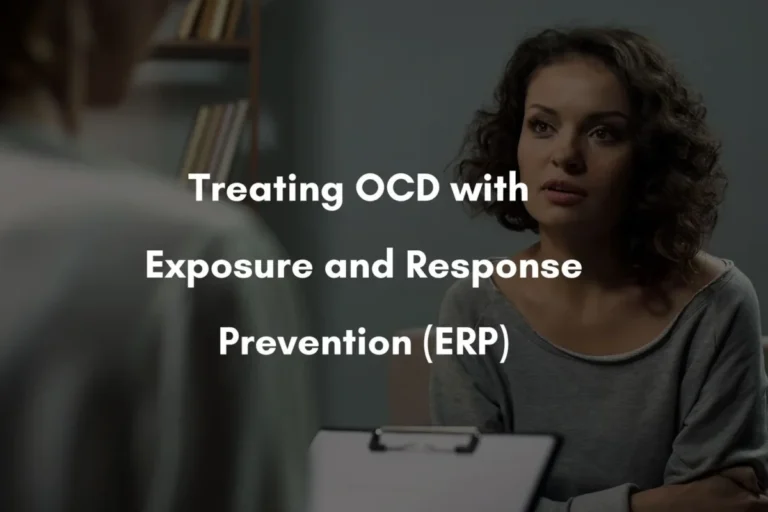
Intrusive thoughts are a known feature of several mental health conditions, most notably OCD, PTSD, postpartum anxiety, and generalized anxiety disorder. In OCD especially, the brain becomes trapped in a cycle where the intrusive thought triggers intense distress, which triggers a compulsion intended to neutralize it, which temporarily relieves the distress, which reinforces the cycle. LiftWell’s clinical team uses Exposure and Response Prevention (ERP), one of the most rigorously supported treatments for this cycle, to help clients break free from it.
What Impulsive Thoughts Are and How They Differ
Impulsive thoughts operate very differently. Rather than arriving against a person’s wishes and causing distress, an impulsive thought tends to feel motivating, urgent, or ego-syntonic, meaning it aligns with or feels acceptable to the person in the moment. Where an intrusive thought is experienced as something happening to you, an impulsive thought often feels like something you want to act on, even when acting on it would be harmful or counterproductive.
Impulsivity as a pattern is associated with conditions including ADHD, bipolar disorder, borderline personality disorder, and substance use disorders. Impulsive thinking tends to prioritize immediate relief or reward over longer-term consequences, which can create significant problems in relationships, finances, and physical safety.
The practical difference between the two can be summarized this way:
- An intrusive thought says something disturbing and you wish it would stop
- An impulsive thought feels compelling and pulls you toward action
Neither is a character flaw, but each points toward different clinical territory and benefits from different therapeutic approaches.
Why People Confuse the Two, and Why It Matters
The confusion between intrusive and impulsive thoughts is not surprising. Both can feel urgent. Both can involve content that a person finds shameful or troubling. And both tend to be kept private, which means most people have no reference point for knowing whether what they are experiencing is common or concerning.
That silence has real consequences. People who misidentify their intrusive thoughts as evidence of dangerous impulses often spend years managing shame and anxiety that could have been addressed much earlier with the right support. Conversely, people who dismiss genuinely impulsive patterns as just intrusive thoughts may not seek the structure and intervention those patterns require.
Accurate identification is not just academic. It is the foundation of effective treatment.
The Role of Evidence-Based Therapy in Addressing Both
At LiftWell, our approach begins with a comprehensive neuropsychological assessment that helps identify not just symptoms but the underlying patterns driving them. This foundation allows our clinical team to match each client with the therapeutic modalities that are actually suited to their experience.
For intrusive thoughts rooted in OCD and anxiety, ERP and Cognitive Behavioral Therapy (CBT) are central tools. For impulsive patterns, Dialectical Behavior Therapy (DBT) offers structured skill-building in distress tolerance, emotional regulation, and impulse management. For clients whose thought patterns are connected to trauma, EMDR and trauma-focused approaches are integrated into care.
LiftWell offers both Partial Hospitalization Programs (PHP) and Intensive Outpatient Programs (IOP) for adults and adolescents, providing the level of support that goes beyond what a weekly therapy session can offer. For clients in Westport, Greenwich, Norwalk, Darien, and across Fairfield County who are ready for real, lasting change, our programs provide that structure without requiring residential placement.
Ready to Understand What Your Thoughts Are Telling You? Reach Out to LiftWell Today.
You do not have to keep carrying the confusion alone. LiftWell’s compassionate clinical team is here to help you get clarity, find the right level of care, and build a path forward that actually fits your life. Contact us to schedule a consultation and take the first step toward meaningful relief.